It’s one of those late winter mornings here in Vermont, where the promise of spring can be felt, despite the deep and beautiful snow.
When harvesting plants for medicinal purposes, each season offers an optimal time for specific plants for capturing maximum healing benefits.
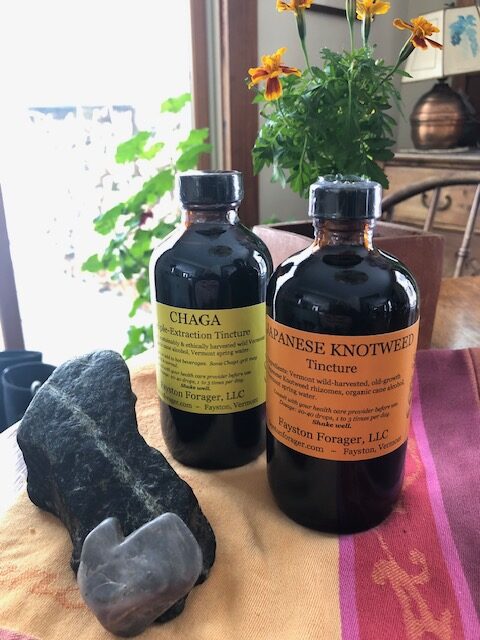
Chaga is harvested during the coldest part of winter, carefully taking only a portion from a living tree.
Japanese Knotweed rhizomes are harvested in early spring. (My thoughts are beginning to lean towards this upcoming harvest in a month or two.)
Hawthorn leaf and flowers are harvested in later spring, while the berries are harvested in the fall.
This past fall, the Hawthorn berries I typically harvest were covered with small black spots and I did not harvest them. Thus, this season I’m only offering a leaf and flower tincture which will soon be bottled.
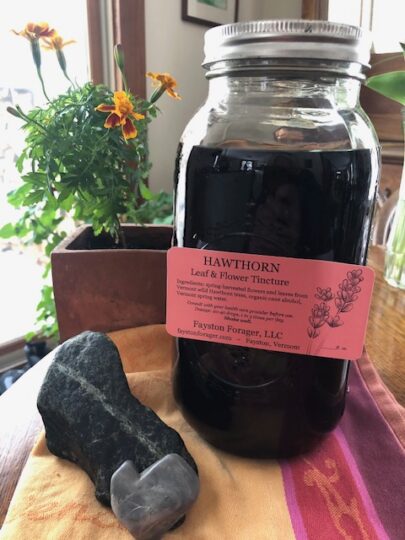
The cardio-protective benefits of Hawthorn are abundantly present in the leaf and flower, as well
as the berries. Per this research, (https://pmc.ncbi.nlm.nih.gov/articles/PMC7047282/), “With expanding global interest, modern research validated the presence of multiple biological and pharmacological activities in the extracts of hawthorn fruits, leaves, and flowers, including cardiovascular protective ability, hypolipidemic activity, and anti-oxidative capacity (Pittler et al., 2003; Wang H. et al., 2011; Zhang et al., 2014). WS® 1442 is the most studied compound consisting of 20% oligomeric procyanidins extracted from the leaves and flowers (45% ethanol extract) of C. monogyna and Crataegus laevigata (Holubarsch et al., 2008). In the United States and European countries, WS® 1442 has been recommended for treating congestive heart failure stages I–III based on the classification of the New York Heart Association (NYHA) (Tauchert, 2002; Pittler et al., 2003).”
On another note, after I switched to using the more costly organic cane alcohol, I did not raise prices. The downside of being a small producer, is the overall much higher cost of materials.
The benefit is knowing that the healthy, healing plant matter is sustainably and ethically hand-selected and wild- harvested from pristine locations. A smaller dosage of Fayston Forager tinctures is often sufficient as a result of the mindful and meticulous harvest and tincturing processes, adding value to the bottles. Pure, healing goodness.
With that said, please reach out directly via email as I’m happy to offer a sliding scale for those in need. As always, I also greatly appreciate when you all help spread the word about Fayston Forager products. Thank you!
Enjoy these bright, lengthening, late winter days.